English
  中文简体
中文简体 русский
 Español
 عربى
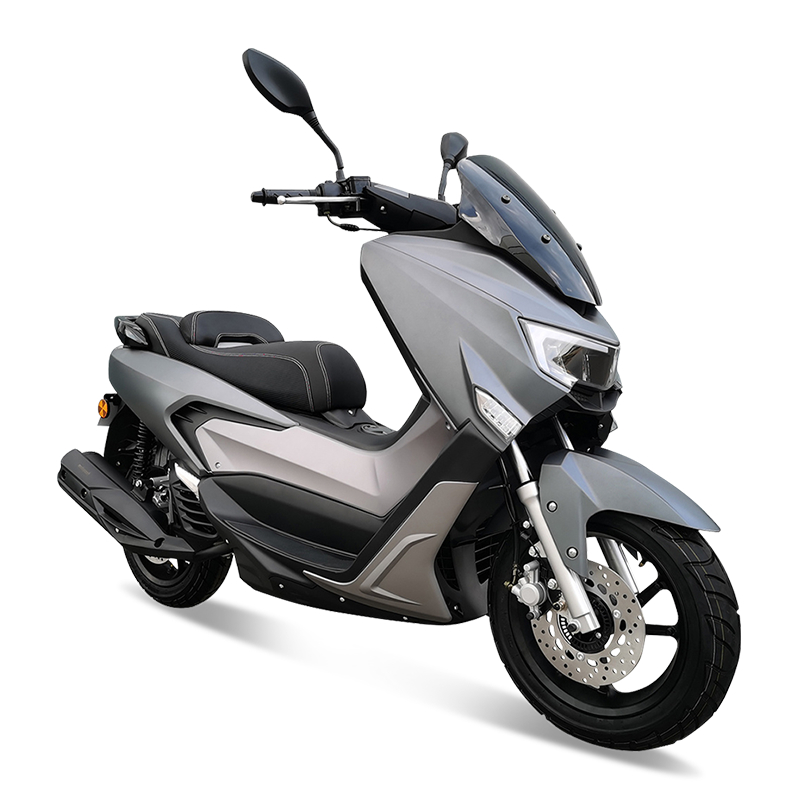
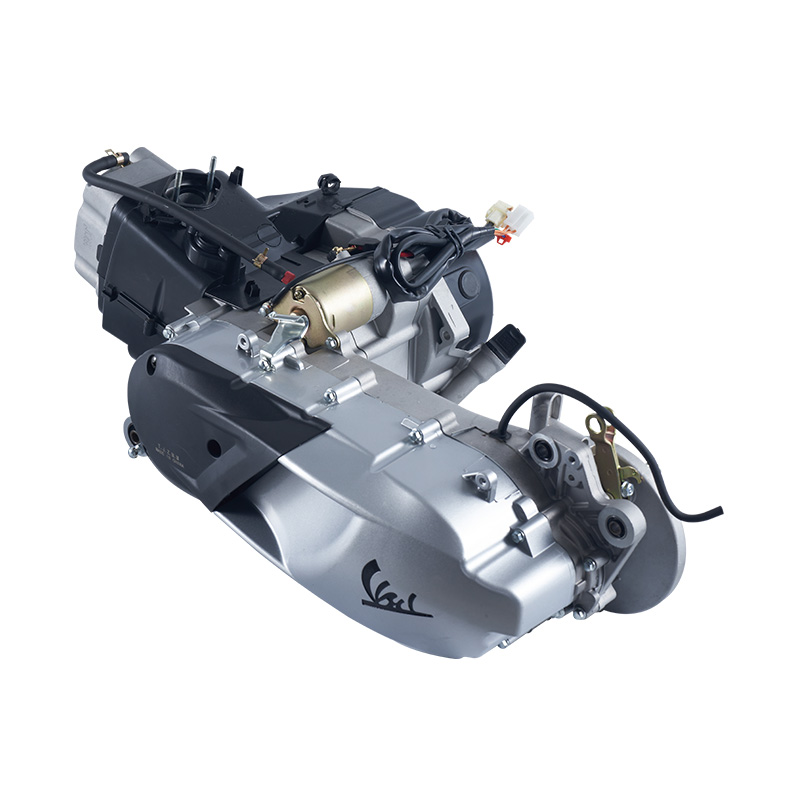
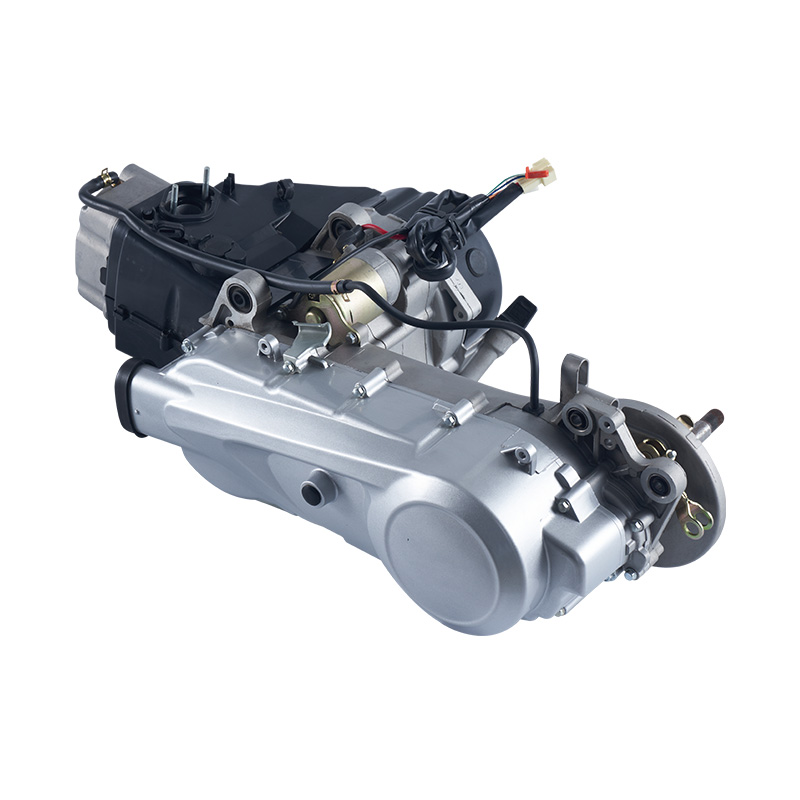
عربىNVX 4th 150cc Liquid-Cooled Electronic Fuel Injection High-Performance Scooter Motorcycle
The 4th Generation NVX 150cc, a high-performance liquid-cooled fuel-injected scooter motorcycle has been meticulous...
Refueling more often than expected. A longer commute that suddenly feels uncertain past the halfway point. The quiet frustration of watching fuel costs add up week after week without any clear sense of whether the tank size or the engine is actually to blame. These are the real concerns that surface when someone starts seriously evaluating a Gas Scooter Motorcycle — not horsepower figures or top speed claims, but the practical math of how far a tank actually takes you, and what it costs to keep it filled.
The relationship between fuel economy and tank capacity is more nuanced than it first appears. A larger tank does not automatically mean longer range if the engine consumes fuel quickly. A highly efficient engine does not resolve the inconvenience of refueling every two days if the tank is small. Understanding how these two variables interact — and how engine displacement, riding conditions, and load all shift the balance — is the foundation of choosing a scooter that genuinely fits daily use.
Fuel economy describes how efficiently a scooter converts fuel into forward motion. For a Street Legal Scooter Motorcycle used in urban conditions, this figure shifts constantly depending on:
A scooter rated for strong fuel efficiency under steady highway conditions may perform noticeably differently in stop-and-go city traffic — which is exactly where most daily commuters spend their time. Fuel economy, in practice, is a range rather than a fixed number.
Tank size sets a ceiling on how far you can travel before stopping. But the actual range — the real-world distance before the fuel light comes on — depends entirely on fuel economy. A scooter with a modest tank and strong efficiency may cover more ground per fill than one with a larger tank and heavier consumption. The two variables are interdependent, and evaluating either in isolation produces an incomplete picture.
The Scooter Motorcycle 125cc category occupies a particular position in the efficiency conversation. Engines in this displacement range tend to operate with lower fuel consumption compared to larger alternatives, which suits the repeated short trips and variable speeds of city commuting. The trade-off is that 125cc engines carry less reserve power for sustained highway speeds or heavier loads.
For a rider whose daily route is urban — intersections, moderate gradients, distances that do not require extended cruising — the 125cc configuration tends to return solid efficiency without demanding a large tank to compensate. The engine is not working hard under typical city conditions, so fuel consumption per kilometer stays relatively low.
Moving above 125cc introduces more power, which can actually improve efficiency on roads where maintaining a consistent higher speed is possible. The inefficiency often attributed to larger engines comes from city use, where the engine is underloaded relative to its capacity — accelerating from stops, idling, and rarely reaching the speed range where it operates most cleanly.
The trade-off shifts: a larger engine may require a bigger tank not because it is inherently wasteful, but because its use case — longer distances, more varied terrain — genuinely demands more fuel to complete a journey without interruption.
A Lightweight Scooter Motorcycle carries a structural efficiency advantage that operates independently of the engine. Less mass means less energy required to accelerate from a stop, less rolling resistance on flat ground, and reduced load on the engine climbing gradients. In city commuting, where acceleration events are frequent, this translates directly into measurable fuel savings over a week of use.
Lightweight construction also tends to pair naturally with smaller displacement engines — not because of any engineering constraint, but because the power demands of a lighter frame are simply lower. The result is a category of scooter where the tank can afford to be modest because the consumption rate supports it.
Smaller frames accommodate smaller fuel tanks. A lightweight scooter built for urban agility may carry a tank that suits its consumption rate perfectly under typical use — but leaves little margin for route changes, unexpected detours, or days when traffic turns a short commute into an extended ride. The efficiency is real; the range ceiling is also real.
Riders who occasionally extend beyond their standard commute need to account for this. Refueling infrastructure along typical routes becomes part of the practical evaluation, not an afterthought.
The Hybrid Scooter Motorcycle introduces electric assist into the fuel equation, reducing reliance on the combustion engine during low-speed urban segments — precisely where fuel consumption is least efficient in a conventional gas setup. Stop-and-go traffic, which penalizes traditional engines, becomes less costly in a hybrid configuration because the electric component handles a portion of that work.
The fuel tank in a hybrid tends to be smaller than in a comparable gas-only scooter, reflecting the reduced burden on the combustion engine. Range, however, may be comparable or extended because total consumption across a journey is lower.
The efficiency gains of a hybrid scooter come with a more complex mechanical and electrical system. Two powertrains mean two maintenance considerations — battery health and combustion engine service — rather than one. For riders whose priority is simplicity and low ongoing cost, the additional complexity may outweigh the fuel savings, particularly on shorter commutes where the efficiency gap between hybrid and conventional 125cc is already narrow.
This is a genuine trade-off, not a clear endorsement of either direction. The value of hybrid technology scales with how much stop-and-go riding a person actually does.
The table below reflects general trade-off patterns across scooter configurations — not manufacturer specifications, but the structural tendencies that emerge from how each category is designed and used.
| Configuration | Fuel Economy | Typical Tank Size | Urban Range | Long-Distance Usability | Complexity |
|---|---|---|---|---|---|
| 125cc Lightweight | Strong | Small to moderate | Comfortable | Limited | Low |
| 125cc Standard | Strong | Moderate | Comfortable | Moderate | Low |
| 150cc-200cc Standard | Moderate | Moderate to large | Comfortable | Good | Low |
| Hybrid Scooter | Variable, improved in city | Small | Good to strong | Moderate | Higher |
| Street Legal Scooter (larger) | Moderate | Large | Comfortable | Strong | Low to moderate |
The pattern that emerges is straightforward: efficiency and range do not move in the same direction across all configurations. A highly efficient 125cc model may cover a comparable distance per fill to a less efficient but larger-tank alternative — the difference is refueling frequency and the buffer available when a journey runs longer than planned.
Urban commuting involves repeated acceleration from low speeds — the condition under which combustion engines consume fuel least efficiently relative to distance covered. A scooter that returns strong efficiency figures under steady conditions will show measurably higher consumption in dense traffic. This is not a flaw; it is a physics constraint that applies across all combustion configurations.
Riders whose routes involve heavy traffic for a significant portion of each journey should factor this in when estimating real-world range. Catalog efficiency figures are typically measured under more favorable conditions.
A commuter whose route combines city segments with stretches of open road at higher speeds is working with a different efficiency profile than a pure city rider. The 125cc engine that suits stop-and-go conditions may feel strained on extended open-road segments, affecting both comfort and consumption. A slightly larger displacement — with a correspondingly larger tank — may return a more consistent experience across varied terrain.
Identifying the actual composition of a typical journey — what percentage is urban, what is suburban, what is highway — gives a clearer basis for evaluating which configuration's trade-offs are acceptable.
Fuel cost over time is a function of both efficiency and how much riding happens. A highly efficient scooter used daily for a modest commute may cost less to run annually than a moderately efficient scooter used for longer distances — even if the latter is considered more capable.
Factors that affect total annual fuel cost:
A smaller tank that requires frequent refueling adds time cost, not just fuel cost. For riders with irregular schedules or limited refueling access along their route, that time consideration is worth pricing into the evaluation.
A fuel-efficient engine that requires frequent servicing may not deliver the cost advantage its consumption figures suggest. The 125cc category generally maintains a reputation for accessible maintenance and straightforward service requirements — one reason it remains widely used for urban commuting rather than being replaced by larger or more complex alternatives.
Maintenance intervals, parts availability, and service cost vary by configuration and market. These are worth investigating alongside the fuel economy figures when assessing total running cost.
Before arriving at a configuration choice, a clear picture of actual use conditions simplifies the evaluation considerably. Working through the following points tends to surface the trade-offs that matter most in practice:
None of these questions have universal answers. They are personal to the rider's actual situation — which is precisely why generic efficiency rankings often fail to translate into useful purchase decisions.
The trade-off between fuel economy and tank capacity in a Gas Scooter Motorcycle is, at its core, a question of how a rider actually uses the machine — not how it performs under controlled test conditions. A scooter with a small tank and strong efficiency suits a predictable urban commute with convenient refueling access. A larger tank with moderate efficiency suits a rider whose routes vary and who values the flexibility of fewer stops. The 125cc category holds a particular relevance for urban use because its efficiency profile aligns well with stop-and-go conditions, while lightweight configurations extend that advantage by reducing the energy cost of frequent acceleration. Hybrid options shift the equation further for riders whose commutes are heavily urban, though they introduce a different set of considerations around system complexity and maintenance. Working through what a daily route actually demands — in distance, terrain, load, and refueling access — produces a clearer picture than any general ranking. For distributors, fleet operators, and procurement contacts evaluating scooter configurations at scale, Taizhou Jiaojiang Zhiwei Motorbike Manufacture Co., Ltd. offers a range of Gas Scooter Motorcycle options built around the practical efficiency and range requirements of real commuting conditions. Contacting their team directly is a sound starting point for sourcing discussions.
E-mail: [email protected]
Tel: +86-13806579227/+86-576-88011088
ADD: Hongjiachaiyang Industrial Zone, Jiaojiang District, Taizhou City, Zhejiang Province, China
China Scooter Motorcycle Manufacturer & Factory