English
  中文简体
中文简体 русский
 Español
 عربى
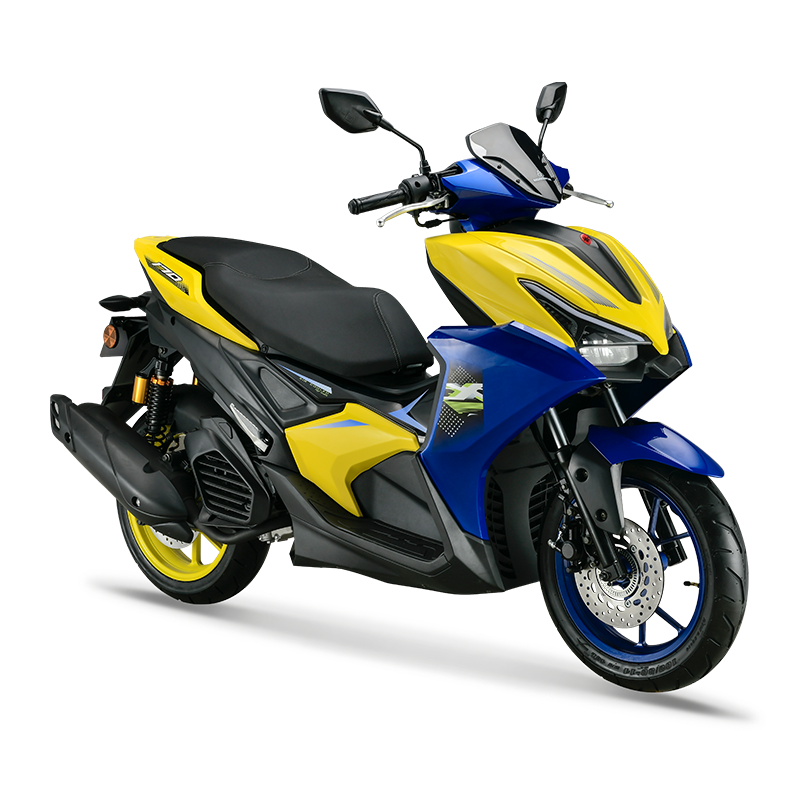
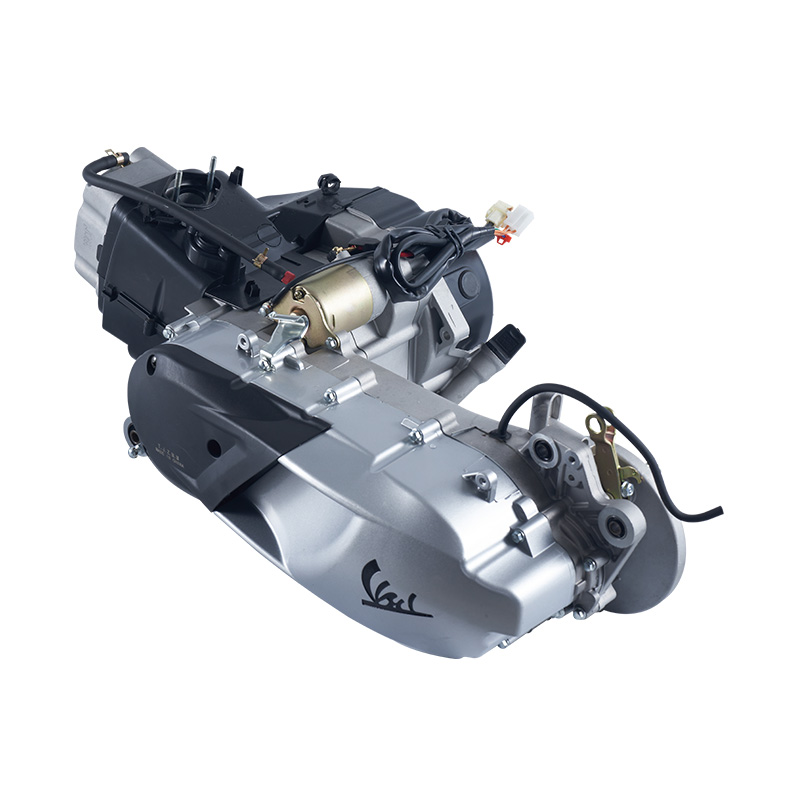
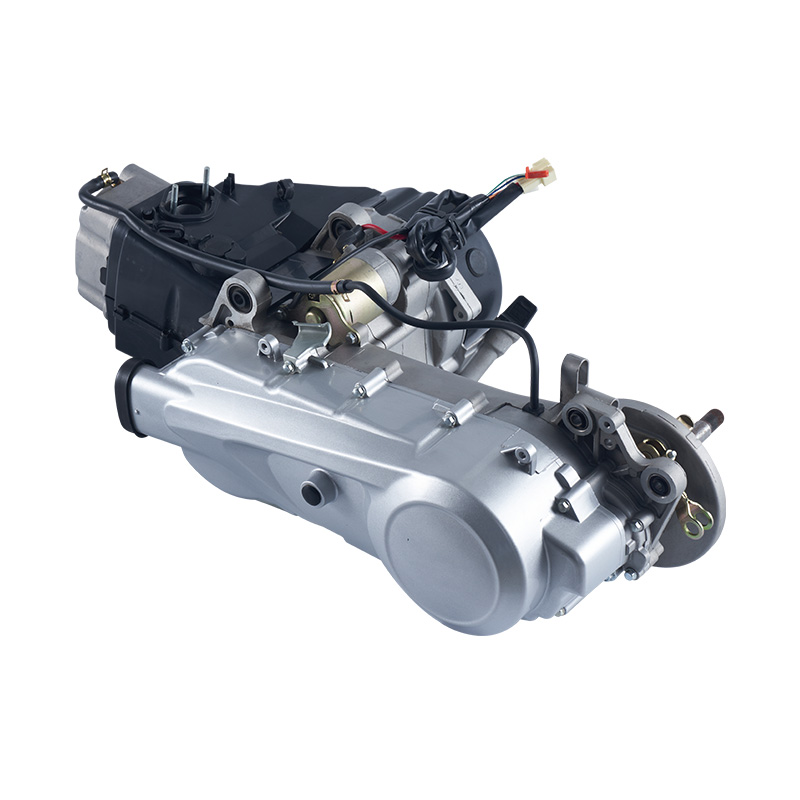
عربىNVX 4th 150cc Liquid-Cooled Electronic Fuel Injection High-Performance Scooter Motorcycle
The 4th Generation NVX 150cc, a high-performance liquid-cooled fuel-injected scooter motorcycle has been meticulous...
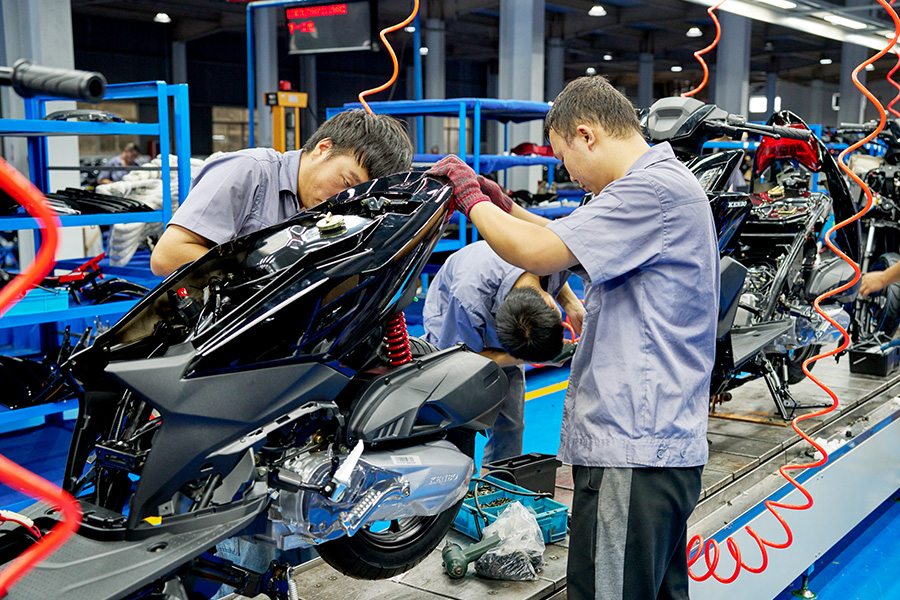
Electric and hybrid scooters continue to grow in popularity, yet many riders still worry about range. While a Long-range Motorcycle attracts attention with its extended travel ability, scooter manufacturers often face tighter constraints—limited space for batteries, lighter frames, and affordability requirements. This creates an interesting challenge: how to increase range without simply installing a bigger battery pack.
Today's engineering solutions involve efficiency, weight reduction, motor tuning, energy recovery, and smart software management. These strategies appear across many classes, from the commuter-friendly Adult Scooter Motorcycle to the cargo-focused Utility Scooter Motorcycle and even machines inspired by the capabilities of a Long-range Motorcycle. This article explores how manufacturers improve range through clever design rather than battery expansion.
A larger battery does extend distance, but it also adds weight, cost, and bulk. For an Adult Scooter Motorcycle, extra bulk affects handling in tight streets. For a Utility Scooter Motorcycle, added weight reduces cargo capacity and makes the scooter harder to control during deliveries. Even designs influenced by a Long-range Motorcycle avoid oversized battery packs because too much weight undermines efficiency gains.
This is why manufacturers turn toward smarter engineering instead of simply scaling up battery size.
Electric motors vary widely in efficiency. Manufacturers enhance range by refining how the motor converts electricity into rotation. These refinements include:
In many cases, this type of improvement has a noticeable impact on range. For an Adult Scooter Motorcycle, better motor efficiency helps riders travel longer without altering the scooter's practical city-friendly size. Meanwhile, a Utility Scooter Motorcycle benefits through reduced energy use when carrying cargo or stopping frequently during deliveries. Similar principles also appear in the development of a Long-range Motorcycle, but in scooters they are even more important due to smaller energy reserves.
Even moderate speeds generate wind resistance that consumes energy. Scooter designers reduce drag by reshaping bodywork, smoothing edges, and improving the path of airflow around the rider. While scooters typically stay below highway speeds, small aerodynamic gains still matter.
For riders of an Adult Scooter Motorcycle, this means less energy wasted during daily trips. A Utility Scooter Motorcycle might include front fairings or streamlined cargo boxes that reduce turbulence. Some manufacturers reference aerodynamic ideas used in a Long-range Motorcycle, adapting them to smaller frames without sacrificing maneuverability.
Weight reduction is one of the most effective ways to increase range. Engineers reduce weight by:
Lighter scooters require less power to accelerate and maintain speed. An Adult Scooter Motorcycle becomes easier to handle, while a Utility Scooter Motorcycle gains extra carrying potential without compromising travel distance. Even though a Long-range Motorcycle traditionally uses larger frames, weight-conscious design concepts help guide scooter development.
Regenerative braking returns energy to the battery whenever the rider slows down. Although the recovered energy is limited, it adds meaningful range, especially in urban conditions with frequent stops.
Manufacturers tune regeneration so it feels natural and not overly aggressive, keeping handling predictable.
Software plays a major role in extending range without increasing battery capacity. Energy management systems monitor:
Then the system adjusts power delivery to improve efficiency. Some scooters feature riding modes—Eco, Standard, Power—that limit acceleration or adjust motor behavior.
On an Adult Scooter Motorcycle, these modes help new riders conserve energy without much effort. A Utility Scooter Motorcycle may include specialized delivery modes intended for consistent speed and efficient stop-and-go patterns. Influences also come from the software tuning used in a Long-range Motorcycle, though scooters generally implement simpler versions.
Rolling resistance determines how much energy is wasted when tires meet the road. Manufacturers refine tires by adjusting rubber compounds, tread patterns, and internal structures to reduce friction without compromising grip.
Some scooters use belt-driven systems, others use gear-based drivetrains. Smoother bearings, improved lubrication, and reduced mechanical drag all contribute to better range.
For the Adult Scooter Motorcycle, drivetrain improvements keep noise low and acceleration smooth. For the Utility Scooter Motorcycle, drivetrain durability helps maintain efficiency even under heavier loads. These techniques echo engineering lessons learned from long-distance machines like a Long-range Motorcycle.
Below is a simple table summarizing how different strategies contribute to extended range:
| Strategy | Impact on Adult Scooter Motorcycle | Impact on Utility Scooter Motorcycle |
Connection to Long-range Motorcycle Design |
| Efficient motor | Longer city rides | Better cargo efficiency |
Shared motor tuning principles |
| Aerodynamics | Smoother airflow | Streamlined cargo setups |
Adapted from long-distance machines |
| Weight reduction | Easier handling | More usable loading capacity |
Similar lightweight approach |
| Regenerative braking | Extra range in stop-and-go | Energy recovery during delivery routes |
Regen tuning adopted from big machines |
| Software tuning | Smarter power use | Delivery-friendly modes |
Range-focused algorithms |
| Low-rolling-resistance tires | Less wasted energy | Strong grip with efficiency |
Long-trip tire research applied |
| Drive system refinement | Lower friction | Durability with efficiency |
Precision engineering shared across classes |
Manufacturers aim for real-world improvements, not laboratory-only results. Riders of an Adult Scooter Motorcycle benefit through smoother commuting, fewer charging stops, and better overall control. Delivery workers using a Utility Scooter Motorcycle experience reduced downtime and steadier performance over long shifts. Enthusiasts familiar with a Long-range Motorcycle often appreciate seeing similar engineering concepts applied to compact, efficient scooters.
None of these methods rely on increasing battery capacity. Instead, every improvement enhances overall efficiency, combining small gains into a noticeable distance increase.
Manufacturers have found many ways to extend scooter range without relying on larger battery packs. By improving motors, refining aerodynamics, reducing weight, tuning software, and enhancing drivetrains, they allow smaller scooters to travel farther while staying compact and practical.
These ideas strengthen every category—from the everyday Adult Scooter Motorcycle to the work-focused Utility Scooter Motorcycle and even models inspired by a Long-range Motorcycle. As technology keeps evolving, efficiency upgrades will continue shaping the future of scooter mobility, giving riders longer trips without enlarging the battery itself.
E-mail: [email protected]
Tel: +86-13806579227/+86-576-88011088
ADD: Hongjiachaiyang Industrial Zone, Jiaojiang District, Taizhou City, Zhejiang Province, China
China Scooter Motorcycle Manufacturer & Factory