1. Why Are Factories Investing in the Fuel-Efficient and Lightweight Scooter Motorcycle Segment?
(1) Addressing commuter demand
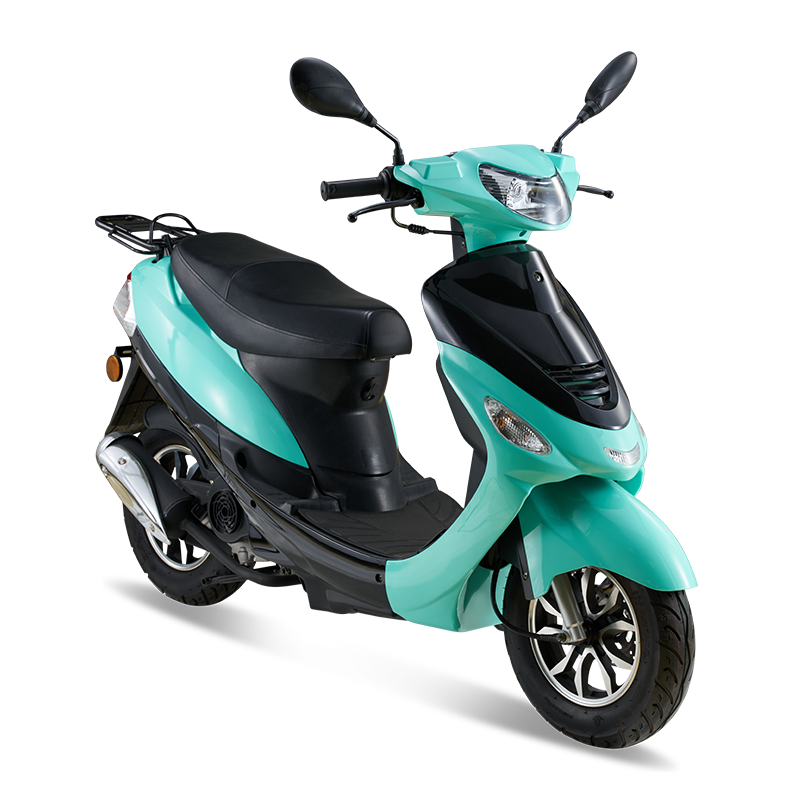
Many urban riders look for a vehicle that fits dense traffic patterns, and the Fuel-Efficient and Lightweight Scooter Motorcycle has become a practical answer. Its low consumption level allows factories to design engines that maintain reliable output while keeping operating expenses manageable for daily users.
(2) Engineering choices for reduced mass
To support the character of a Fuel-Efficient and Lightweight Scooter Motorcycle, manufacturers focus on frame geometry, material selection, and simplified bodywork. These decisions allow engineers to create structures that riders can handle with ease during short trips or frequent stops.
(3) Role in emerging-market expansion
Importers in developing regions favor the Fuel-Efficient and Lightweight Scooter Motorcycle because it aligns with road conditions and cost expectations. Factories view this category as a stable entry point for long-term cooperation with overseas distributors.
2. What Makes the 50cc Scooter Motorcycle Moped Valuable in the Global Supply Chain?
(1) Regulatory adaptability
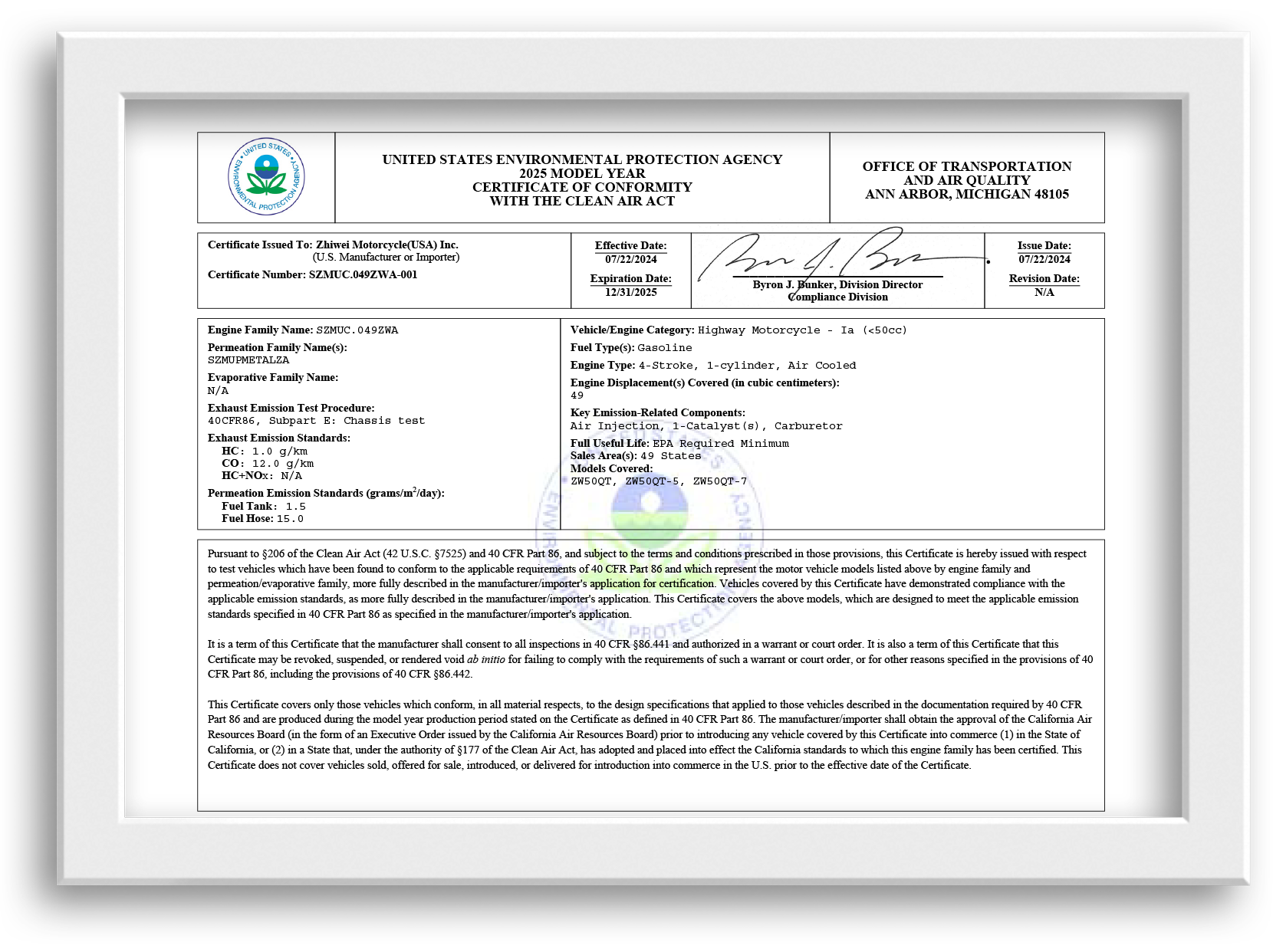
A 50cc Scooter Motorcycle Moped often falls into licensing or low-barrier categories in many countries, making it attractive for new riders. Manufacturers adjust carburetion, emissions systems, and exhaust tuning so the units meet varied regional rules without major redesigns.
(2) Manufacturing efficiency
Due to its scale, the 50cc Scooter Motorcycle Moped can be produced on highly organized assembly lines. Component interchangeability—such as shared wheels, electrical modules, and handlebar layouts—helps factories maintain consistent output for distributors that purchase in batches.
(3) Market resilience for entry-level buyers
Importers note that a 50cc Scooter Motorcycle Moped remains steady in sales during economic fluctuations. Its simplicity offers buyers a vehicle that supports short-distance commuting and basic errands, keeping the segment relevant year after year.
3. How Does the Compact Motorcycle Fit Into Manufacturer Strategies?
(1) Balancing size and function
A Compact Motorcycle appeals to riders who want maneuverability without shifting to a scooter platform. Factories refine seat height, chassis width, and steering response to give this category a comfortable riding posture suitable for city navigation.
(2) Export suitability
Because a Compact Motorcycle can be adapted for several market levels, manufacturers scale production by adjusting engine displacement, suspension stiffness, or accessory packages. This flexibility helps importers match models to local preferences without overhauling production lines.
(3) Support for varied riding environments
A Compact Motorcycle also fits mixed-surface roads. Factories often equip these models with practical tire profiles and reinforced frames, adding durability while keeping the motorcycle light enough for daily commuting.
4. Why Do Factories Continue to Develop the Lightweight Motorcycle Category?
(1) Urban usability
A Lightweight Motorcycle is favored by riders who frequently navigate parking lots, narrow streets, or crowded markets. Manufacturers keep the category responsive by focusing on engine calibration and structural simplicity.
(2) Production advantages
Because a Lightweight Motorcycle uses fewer heavy components, factories can reduce transportation and storage costs. This efficiency helps retain stable pricing for distributors who depend on consistent shipment cycles.
(3) Expansion into lifestyle segments
In some regions, a Lightweight Motorcycle also appeals to hobby riders seeking a simple recreational option. This broadens the customer base and encourages factories to maintain a steady product lineup within the segment.
What Do These Categories Signal for the Industry?
From the practical reach of the Fuel-Efficient and Lightweight Scooter Motorcycle to the regulatory convenience of the 50cc Scooter Motorcycle Moped, and from the maneuverability of the Compact Motorcycle to the broad usability of the Lightweight Motorcycle, manufacturers continue shaping a supply system centered on commuting efficiency, adaptable engineering, and global distribution readiness. These categories show how small-displacement models remain a core part of manufacturing strategies as factories work with importers to meet varied market conditions worldwide.


 English
  中文简体
中文简体 русский
 Español
 عربى
عربى